
A loft conversion is one of the most cost-effective ways to expand your living space without moving home or extending outward. Whether you dream of an extra bedroom, a quiet office, a playroom, or a studio, understanding loft conversion cost is essential before starting your project.
This guide explains typical prices, cost factors, conversion types, and how tools such as a Loft Conversion Cost Calculator can help you plan more accurately.
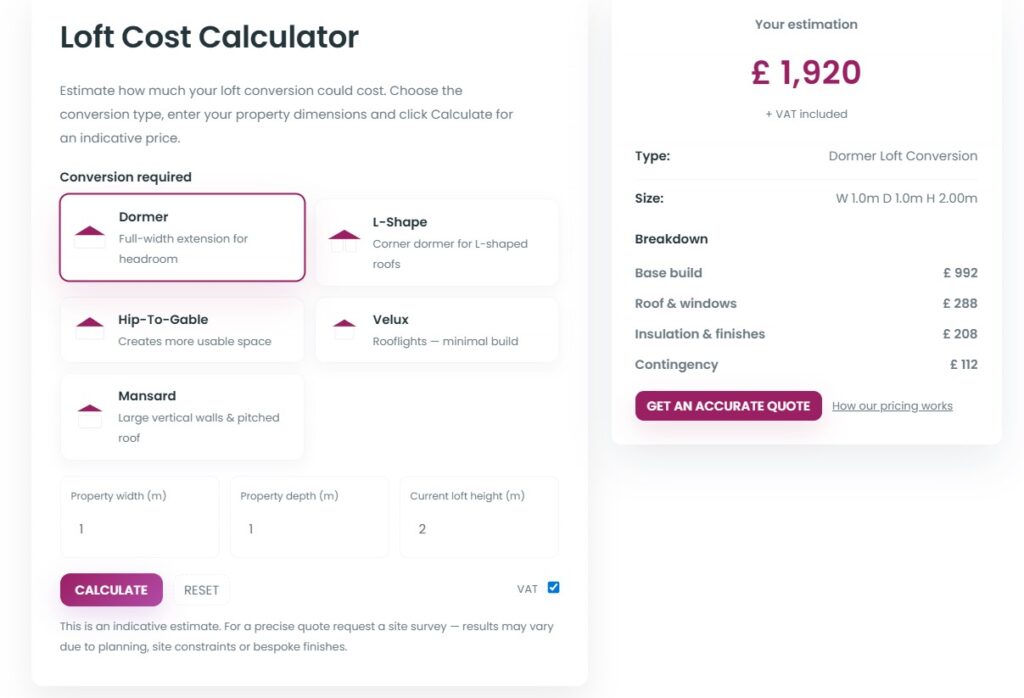
Why Use a Loft Conversion Cost Calculator
Before you contact builders, it’s helpful to get a realistic early estimate. A Loft Conversion Cost Calculator gives you an approximate figure based on:
- Size of your loft
- Conversion style (Velux, dormer, hip-to-gable, mansard)
- Type of finish
- Extras like staircases, insulation, windows, and bathrooms
While a calculator doesn’t replace a full site survey, it helps set expectations, compare quotations, and plan a budget with fewer surprises.
Typical Loft Conversion Cost
Loft conversion cost varies depending on design, layout, structure, and location. Although every property is unique, the following price ranges are commonly seen in the UK market:
| Conversion Type | Average Cost Range |
|---|---|
| Rooflight / Velux conversion | £25,000 – £35,000 |
| Dormer loft conversion | £35,000 – £55,000 |
| Hip-to-gable conversion | £45,000 – £60,000+ |
| Mansard or large structural conversion | £55,000 – £75,000+ |
| High-spec or large luxury conversions | £60,000 – £120,000+ |
The national average for most standard projects typically falls somewhere between £35,000 and £65,000, depending on finish and complexity.
Major Factors That Affect Loft Conversion Cost
Understanding what contributes to the price helps you control costs more effectively.
1. Type of Loft Conversion
The style of conversion is the biggest cost factor:
- Rooflight / Velux: Easiest and cheapest option. No roof structure changes — just add skylights, reinforce floors, and finish internally.
- Dormer: Creates extra headroom and floor space. Mid-range price due to structural additions and window installation.
- Hip-to-gable: Extends the sloped end of the roof to maximize usable area; costs more due to structural changes.
- Mansard: Involves significant roof alterations — usually the most expensive but offers the largest increase in space.
2. Size & Usability of Roof Space
Larger lofts usually cost more overall but may cost less per square metre. Smaller lofts can have a higher cost per metre because fixed expenses (stairs, structural work, architectural drawings) remain the same regardless of size.
3. Structural Condition & Roof Type
Older roofs, unconventional structures, or shallow pitch roofs may need extra reinforcement or redesign, increasing costs. Properties with trussed roofs may require steel beams or re-engineering.
4. Windows, Glazing & Natural Light
The number and type of windows can significantly influence cost:
- Standard Velux windows are the most affordable
- Dormer windows cost more due to structural work
- Full-height glazing or Juliet balconies increase costs further
5. Interior Specification & Finishes
Budget interior work keeps costs low, while high-end finishes quickly increase the total. Cost-influencing features include:
- Flooring (wood, carpet, engineered flooring)
- Plastering and painting
- Built-in storage
- Electrical fixtures and sockets
- Heating and radiators
- Bathroom installation (if needed)
6. Labour, Region & Professional Fees
Prices vary by region. Labour tends to be higher in major cities. Professional fees may include:
- Architectural drawings
- Structural engineer reports
- Building regulations approval
- Planning permission (if required)
- Surveys
These may contribute anywhere from 5–15% of the project budget.
7. Plumbing, Electrical & Extras
These optional elements can significantly add to your final cost:
- Adding an ensuite bathroom
- Installing new plumbing lines
- Upgrading electrical circuits
- Adding underfloor heating
- Installing bespoke storage solutions
Approximate Cost Breakdown (Example Scenario)
Here’s a typical breakdown for a mid-sized dormer loft conversion:
- Structural work & construction: £15,000–£25,000
- Windows / dormer installation: £4,000–£8,000
- Staircase installation: £2,000–£5,000
- Plumbing / electrical work: £2,000–£6,000
- Insulation & fire safety compliance: £1,500–£3,000
- Internal finishes & decoration: £3,000–£8,000
- Professional fees: £1,500–£4,000
Total estimated cost: £35,000–£55,000
Using a Loft Conversion Cost Calculator helps you plug in your loft’s specifics to get a closer approximation.
How to Reduce Loft Conversion Cost
If your goal is to stay within a reasonable budget, here are practical ways to reduce the total cost:
- Opt for a rooflight/Velux conversion if you don’t need major structural changes
- Keep glazing simple — large dormer windows and bespoke frames raise costs
- Choose standard finishes rather than premium materials
- Design efficient layouts to reduce wasted space
- Avoid unnecessary extras unless essential
- Always compare at least three builder quotations
- Finalize your design early to prevent costly mid-project changes
Benefits of a Loft Conversion
A loft conversion is more than an additional room — it’s a strategic investment that can transform your home:
- Adds valuable living space without altering the property footprint
- Increases property value, often more than the cost of the build
- Ideal for an extra bedroom, office, studio, or multi-use family area
- Less disruptive than a full extension
- Improves property appeal if you plan to sell
Conclusion
Understanding loft conversion cost is the first step toward planning a successful and budget-friendly project. The price depends on conversion type, structure, finishes, and added features like bathrooms or glazing. Using a Loft Conversion Cost Calculator gives you a clearer forecast and helps you compare estimates more accurately.
Whether you want a simple rooflight conversion or a spacious dormer upgrade, careful planning ensures your loft becomes a comfortable, functional, and valuable part of your home.
FAQs
A rooflight/Velux conversion is the cheapest option because it requires minimal structural changes.
No. Many loft conversions fall under permitted development, but anything altering the roof shape or height may require planning consent.
Most standard conversions take 4–8 weeks, depending on size and complexity.
Structural changes, dormers, bathrooms, bespoke windows, and high-end finishes are typical cost drivers.
Yes, a well-executed conversion often adds more value to the property than the total cost of the project, making it a highly beneficial investment.